Posts Tagged ‘KDE’

Gnome Panel is Alive

// February 5th, 2013 // 12 Comments » // Free Software

The death of Gnome Panel

Gnome Panel (or more properly, gnome-panel) is the main dock that you would see in the Gnome 2 series desktop, and in the Gnome Fallback session (also called Gnome “Classic” in many distributions) in Gnome 3.

To provide the typical desktop experience, it’s also accompanied by Nautilus and Metacity along with a few other libraries (hence forth, gnome-panel’s friends). Gnome Panel and friends have recently been deprecated so that developers have more time to focus on Gnome Shell, the new default shell for Gnome that has a vastly simplified (and better) technology stack. Last November, Vincent Untz announced that he would stop maintaining Gnome Panel and friends beyond the 3.6 release, which means the death for it unless anyone else takes it up.

Then What

I’ve been an avid user of the Gnome 2.x series and also Gnome Fallback in the 3.x series. I’ve gotten rather good at supporting it too. We include it by default in Edubuntu, and even have an option in the installer to make it the default for installations over Unity. It provides a low-footprint, fast and simple desktop experience with very reasonable usability, while being very configurable and lockdownable. (my spell check says that’s not a word, but I don’t care).

I’ve been considering whether we should switch to having Xfce or LXDE as an alternative to Unity, but after discussing it with other Edubuntu contributors, it became clear that if I wanted to do that, I’d have to be willing to maintain it for Edubuntu by myself. In Edubuntu we’ve been pretty good at having at least 2 people being interested in any side-project we pick up and I like to keep it that way if we can. It means that if someone gets a bit busy, there’s someone who can pick up the slack for a little while. Also, Xfce and LXDE had big holes in usability, especially when it came to things like having multiple displays and running on laptops. I decided to put that project on the backburner a little since Ubuntu 13.04 will still be using Gnome 3.6, which meant that we’d have the Fallback session for one more release anyway.

The Inevitable Fork

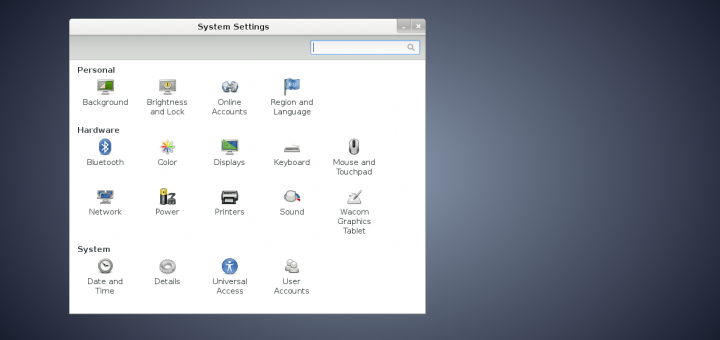
Ikey Doherty forked off Gnome Panel to create a new environment called Consort. Metacity is forked to become Consortium. The website where the Consort desktop environment used to live seems gone now, but here’s a link to some screenshots from Google+.

This caused a bit of a stir, Vincent Untz posted a good chronology of what lead up to it and why he believes that a fork is a bad idea when the Gnome project has effectively put the upstream code up for adoption.

I’ve been interested in the Consort family since it could potentially be something that we could use in Edubuntu once the upstream gnome-panel is no longer in the archives. Also, while Gnome Shell, KDE Plasma Desktop and Unity are great and have come incredibly far in terms of stability and performance, it’s just not always for me. I want to be able to use it for myself in virtual machines, older machines and some other special cases (most notably, on LTSP).

Josselin Mouette, maintainer of Gnome in Debian, approached Ikey after some requests have been made for it in Debian. If you’ve read the post and the IRC logs linked, then you’ll probably agree that it could’ve gone a lot better. I’m not on the SolusOS IRC channel so only saw the conversation after the fact, but I was disappointing since it would need to go into Debian if I’d want to support it in Edubuntu. I think both Josselin and Ikey could’ve handled it better, but humans are just that and emotions and misunderstandings happen.

And so I Bite

I was chewing a bit on Josselin’s comment on how the former maintainer “maintainer decided to give the key to anyone who wanted to” and it’s been several weeks since Vincent invited people to take over maintainership. I decided that I’d at least be willing to do the absolute minimum just to keep the project releasable every six months so that it can be included in distributions, maintain its online presence pages, bug tracker status and keep up with component changes in the stack. So I e-mailed Vincent and explained what I’m willing to do. I had very little resistance, Vincent sent an email out to other people who are steakholders in the gnome-panel project and after a week, there were no objections. So here I am, brand new maintainer of the Gnome Fallback session and its components!

This means that the project is, at least for now, alive again. It’s not going to be part of the official Gnome 3.8 release (I still have to figure out exactly what that means), but there will be a 3.8 release of Gnome Panel and friends as tarballs and for people who maintain it in distributions, things will continue to work exactly as it did before.

Short-term Goals

  • My complete primary goal for this at the moment is to ensure that gnome-panel, metacity, etc is releasable alongside the Gnome 3.8 release. This basically means making sure it builds, including any patches that we can and releasing.

Medium-term Goals

  • Do something about the long buglist. The Gnome bug tracker has an ugly long list of gnome-panel bugs (939 at my last count). I want to eliminate all the stale Gnome 2.x gnome-panel bugs of which a very large amount of them are no longer relevant (at least on first glance). Then I’d like to do some regular posts to the mailing list and blog about a few prominent bugs every now and again and try to fix them and get people involved.
  • Porting Metacity to GTK3. So here’s a bit of really good news. Josselin is also involved with this and one of his mid-term goals is to port metacity to gtk3. It’s something that I know would have to happen, but I don’t have the skills to do that (yet) and I’m glad that he has took this up. Josselin’s mid-term goals also include possibly adding support for the new notification  system (if necessary) and adding support for the new Gnome global menu.
  • Create a nice project page with goals and to-do list, who’s envolved and what they’re doing and encourage more people to get involved. The current page is rather outdated so it would be nice to fix it. For now that mostly involved bringing the Gnome Panel Gnome Wiki page up to date.

Long-term Goals

  • My pet peeve…  intelligent launcher icons. Windows 7, Mac OS X, KDE, Unity and Gnome Shell have docks that work very similarly in many ways. You click on a launcher and those same launcher entries are recycled as your window list. Gnome Panel is a bit old fashioned in this regard. Many people use 3rd party panels and launchers just to get around this. I have thought for a long time that this should be fixed in Gnome Panel and long-term, it’s something that I’d like to see happen.
  • Make the stack as downstream-friendly as possible. Regarding Ikey and Consort, I don’t actually think it was a completely horrible idea at the time. We live in a free world where we use free software and anyone is allowed to do whatever they want and fork whenever they want, and while that doesn’t necessarilly mean it’s a good idea, it also doesn’t mean that we need to get all hissy about it. I’d actually be very interested in working with people who want to fork and find out why they want to fork and try to reel them in closer to upstream. In the case of Consort, I think it would be most beneficial for both projects and all their users if Consort was a branch of Gnome Fallback, rather than a fork. Both projects use Git, FFS. I’ll reach out and try to minimize duplication of effort while not blocking anyone on experimenting with new features or implementing distro-specific changes.
  • More metacity features. Metacity’s compositing features have come quite a long way, there are still a few bugs that need to be sorted out, but more than that, there are many window manager features that users have become accustomed to in pretty much all the other environments. Ikey has indicated previously that he wants to do this for consortium. It’s one of the reaons I’ll be super-nice to him because I’d really prefer that he submit as much of that upstream as possible.
  • Make everything worth configurable and lockdownable. There are some settings that I get requests from from the users I support so often that it’s just getting boring. The Gnome 2.x series proved to work well in educational and corporate environments. I say we should play on that strength and make it even more  so, while sticking 100% with the Gnome Human Interface Guidelines, of course.

Very Long-term Goals

Well, the fact is, Gnome Fallback will die. There’s a new project called Gnome Legacy, it implements a Gnome 2.x-like experience in Gnome 3. As time goes by, older machines become more powerful and the missing pieces will be implemented and eventually there would be no more good reason for anyone to want to run what we now know as Gnome Fallback. I think it could still have a good 3-5 years or maybe even more in it. Who knows, by then Gnome 4 might even be in development and all of this will be ancient history.

So, my very quick “Eek, I’m now maintainer of Gnome Panel!” post has become quite lengthy post, if you have any questions, I’ll respond to it in the comments.

SociBook del.icio.us Digg Facebook Google Yahoo Buzz StumbleUpon

Edubuntu Preliminary Plans for 12.10

// May 10th, 2012 // 5 Comments » // Education, Free Software

Edubuntu 12.10 Plans

Today at the Ubuntu Developer Summit we had a session to plan out the next release of Edubuntu.

For the Edubuntu 12.10 core product, we’re doing some typical Edubuntu updates and features, which include:

  • Authentication step in the installer for AD/Samba4/LDAP
  • We’ll be reviewing the installed apps, add gnote, refresh the kde-edu apps selection
  • Dynamic installer slideshow, based on options selected
  • Juju charms for educational web apps (Moodle, WordPress Multisite, etc)
  • Remote Live Installer (booting an Edubuntu/Ubuntu livecd over the network
  • Education-specific software highlights in Software Center
  • Speed-up installation by optimising the way we ship language packs
  • A variety of Desktop/Artwork tweaks and fixes

Edubuntu Labs: Get Excited and Make Things

On Tuesday I had 2.5 minutes to speak about Edubuntu during a plenary session where I presented some of our more ambitious plans in Edubuntu. We want to make it easier for people to work on their ideas and projects that might be good for Edubuntu, but that doesn’t necessarilly fit into our main product yet or in a 6 month release cycle. For that, we’re starting Edubuntu Labs (subject to namechange). A playground for experimental and exciting features that might one day make it as a supported Edubuntu product. Internally, we’re starting two of these projects to kick it off.

1. Edubuntu Server

Edubuntu Server is a product we discontinued a few years back. Due to popular demand, we’re considering reviving it as a product. Aspects we’re currently investigating:

  • Zentyal Small Business Server
  • A built-in disk-cloning tool using LTSP
  • A remote installer for Ubuntu based installer media
  • Schooltool
  • Schooltool integration into Zentyal
  • Samba4
If we have Zentyal/Schooltool integration by Alpha1 we’ll create a “task”  for this in Ubuntu. We’re not shipping any installation media for this for 12.10, but we have some very clever installer ideas that might be available by 13.04.


2. Edubuntu Tablet

Schools are spending too much money on iPads, and working with the Edubuntu project, I’m going to do what I can to try and fix that.
  • The first device we’re targeting for Edubuntu tablet support is the Zatab: http://zareason.com/shop/zatab.html
  • For 12.10 we want to release an unofficial, technology preview version of Edubuntu for Tablets. We want to show software developers what a completely awesome platform Edubuntu can be for schools and encourage them to get their software through the proper channels so that it’s available via the Ubuntu Software Centre by 13.04.
  • We’ll be using Unity 3D as the default desktop, it’s great for touch devices
  • The Kubuntu team is also planning to support this device with the KDE Plasma Active Desktop, we’ll be doing some collaboration maintaining this device’s kernel and hardware enablement.

All of this is still early work, but I wanted to get it out there as early as possible. Over the next 2 weeks there’ll be more official announcements on the Edubuntu website. We’re looking for more contributors to help us out with this, please join us on #edubuntu and add it to your autojoin and introduce yourself on the edubuntu-devel mailing list ;)

SociBook del.icio.us Digg Facebook Google Yahoo Buzz StumbleUpon

Why I love Debian

// August 9th, 2011 // 10 Comments » // Free Software

Now and again, someone asks me “Why do you use Debian?” or “What’s so great about it? Why don’t you use (insert any other Linux distribution here)? I never quite know what to say. I’ve gotten so wrapped up in why Debian is great that it has become hard to imagine how someone else couldn’t see what I admire in it.

So.. what IS so great about it?

It’s great for similar reasons as Wikipedia. Wikipedia builds this huge collection of free articles, pictures and videos and assimilate it by making sure the content is free, that statements are properly backed, that there are proper links between articles and probably a few dozen really big things I haven’t even  ever thought about.

Great community. Debian has some parallels to Wikipedia. It’s almost like a Wikipedia but for software instead of articles. It assimilates free software and makes it easy to use on a very wide variety of systems. It does so better than any other system that exists (at least IMHO, I list just some of the reasons for saying that below). Packagers are like editors on Wikipedia. They integrate all kinds of free software into the system, making sure it meets the project’s quality standards and that the licensing is sound.

Operating system support. You can run Debian with a Linux, FreeBSD or GNU/Hurd kernel. FreeBSD and GNU/Hurd is admittedly not as rounded as Linux in all situations, but just the fact that you have a choice of operating system kernel and that the project supports 3 of the most well known ones is amazing. I can’t even think of one other system that actively works on supported different kernels.

Desktop support. Some systems focus on Gnome, KDE or in the case of Ubuntu, Unity. Debian supports a really wide variety of desktop environments. Gnome, KDE, Xfce, LXDE, Fluxbox and more are all fully supported and in the main archive.

Architectures. It runs on a really amazingly wide range of hardware. It runs officially on i386, amd64, armel, sparc, powerpc, ia64, mips, mipsel, and IBM/s390, but you can also run it unsupported on alpha, armhf, avr32, hppa, m68k, powerpcspe, sh4 and sparc64 architectures. Debian scales from some of the tiniest computers that can run an operating system to the world’s most powerful super computers.

The Debian Social contract. Many distributions exist to make profit. There’s nothing wrong with that and I fully support that people use free software to make a living (I’d be a hypocrite if I said otherwise). Unfortunately, many distributions also base their choices on their profit motives. Decisions are often made based on “What’s going to make us profit right now” as apposed to “What will be best for our users now and in the long term?” (I’ll stay away from specific examples for now because this blog post is about Debian and not Oracle, Novell and similar companies). Debian exists for its users. It’s mission is defined in the Debian Social Contract. Decisions are made based on what’s best for the user and not to maximize benefits of the project sponsors.

If I don’t stop here I’ll go on all night. And I haven’t even started talking about how great APT is yet or that Debian has pretty much the largest collection of high quality packages available. Or how reliable upgrades are. But this blog entry isn’t about convincing people to use Debian, it’s about expressing why I like it so much and I’ve probably expressed that sufficiently already.

But.. But…

Oh yeah, I get some uphill from people for liking Debian, I can deal with it.

What about Ubuntu? There are some shortcomings in Debian that can’t really be fixed due to its public commitments, or at least, fixing them would break things in Debian. Apple has created a huge eco-system around the Apple App Store. It’s how people buy applications now on most Apple systems. It’s been so successful that Google has used the same concept on the Android Marketplace. Many other systems are doing it too, Ubuntu is promoting free software and non-free software alike in it’s Software Center. Ubuntu will be making it easier for people to buy and install non-free software. Some critics might say that Ubuntu is promoting non-free software that way, but it’s a good experiment and it’s great that it can happen without having to be part of the Debian project. There are more things that Ubuntu does that would be really difficult to get into Debian, but I don’t want to focus on that because Ubuntu is really a *great* Debian derivative. It has delivered Debian (in some form) to more users than Debian itself has by relentlessly working on making it as easy to install and maintain as possible. On top of that, Ubuntu does a great job of submitting their fixes and improvements back to upstreams and to Debian itself. I use Ubuntu on my home desktop and some servers and support it at clients on a daily basis. I think it’s a worthy project and it’s great that it exists. So why do I sometimes use Debian instead of Ubuntu? On servers, stable releases of Debian and Ubuntu LTS releases are quite close to each other. Debian provides more testing before releasing and only releases when the system is ready, where Ubuntu sticks to a committed release time. Ubuntu’s release cycle also has it’s own benefits, but recently I’ve come to prefer Debian Squeeze on my own machines (I don’t even have to use Plymouth!) and I know many people feel differently about it and that’s fine. On my laptop I’m a bit more risky.. I want new, cutting edge, I don’t mind if there’s some problems now and again and I’m happy to fix it when it does pop up. I run Debian Unstable on my laptop with packages from Experimental. It works great for me. I’ve been running it again (used to do it before Ubuntu started) since late last year and besides a transition to /run that caused dbus to break and gdm not to start for one evening, I haven’t any problems worth mentioning. On development versions of Ubuntu the ride is typically much more bumpy. That’s not a problem for most Ubuntu users since users usually stick with with stable releases, and Ubuntu releases often enough (way more than Debian) so that they could still have newest software on a regular basis. There are many views on Debian and Ubuntu, in my opinion Ubuntu is an important and relevant derivative and even though it’s goals are somewhat different, it compliments and promotes many of the Debian ideals.

It’s old!  Debian’s release cycle isn’t a bug, it’s a feature. I’ve mentioned some of the benefits of releasing when ready above. On top of that, Debian has also made its backports repository an official resource, which makes it easier to get newer software on stable releases. There are also micro-sites like mozilla.debian.net where users can get some specific backports for certain types of packages. I guess Debian could really benefit from  something similar to PPAs for this. Unfortunately Launchpad.net doesn’t support Debian builders (understandably so since waiting times on Ubuntu packages can already be quite high). The concept of another PPA implementation has been bought up on the Debian lists before and I have a lot to say about it, but that will be another blog entry. Also, Debian has something in between stable releases (which can get quite old on desktops) and unstable/experimental (where all the active development is taking place). When a package has been in unstable for a while and doesn’t do harm to your system, it’s promoted to an repository called ‘testing’. In testing you get a good combination of stability and new software. Admittedly you probably don’t want to deploy testing in large corporate environments since it’s officially unsupported, but for personal machines and for the typical hacker, it’s known to work great.

Choose 10 completely random numbers! 4. 4. 4. 4. 4. 4. 4. 4. 4. 4. (I never claimed that Debian is perfect)

In Summary

Debian has a large and vibrant community with a big eco-system around it. It has many derivatives, some of them extremely high-profile and special in their own right. The whole effort is spectacular and awesome- and it’s all from a completely distributed world-wide self-governed community project. Sure, it’s not perfect, but I can’t help to look at it and admire it as one of the wonders of the age of information.

And now I have something to point to when people ask me, “Why do you like Debian?” :)

SociBook del.icio.us Digg Facebook Google Yahoo Buzz StumbleUpon

Renewed enthusiasm for Edubuntu

// May 23rd, 2009 // 2 Comments » // Free Software

Renewed Enthusiasm

Recently I’ve been wondering if I really want to be involved with Edubuntu or not, I blogged about it, and have been talking to Jordan Mantha about a lot of the issues we have had. I also booked a ticket to Barcelona for the Ubuntu Developers Summit, so that we could get a few people together to figure out how we can make Edubuntu a good choice for educators and something that people will be happy and proud to contribute for. I was very pleased when I applied for accomodation sponsorship and Canonical said they’d pay for accomodation and my flight tickets (thanks Canonical, it’s very much appreciated), but I think I’m even more excited about the renewed energy in the Edubuntu community. In just the last two weeks we’ve had a surge in enthusiasm and new people dropping by being *very* eager to participate and contribute. It creates a problem where we have too many ideas and some people who are new who want to get something into Edubuntu but who don’t quite understand how Ubuntu’s processes work yet, but I’m not complaining, I think it’s great that people care about Edubuntu again, and we have ideas on how to get around those problems.

Ideas

I thought I’d jump right in and mention some of the things that we’ve been discussing recently. Currently, Edubuntu has just been an add-on CD with packages for an Ubuntu installation. There’s plenty of good reasons for this, such as the amount of space available on a CD (Ubuntu already fills a disc so you have to remove things in order to add anything else), being desktop agnostic, etc. However, the feedback that we received suggests that most people prefer a full distro installation.

We’re not sure how it’s going to happen yet, but we’re probably going to have full releases again that can be installed via DVD or USB disk. Plenty of people have stressed how important it is to be able to demo Edubuntu properly. We’re also going to be looking at getting an LTSP instance in the live environment, which will be a challenge doing it right but will also aid in demo’ing LTSP.

We also want to work better with upstream projects. It’s been stressed in Ubuntu and upstream projects how beneficial a good relationship between Edubuntu and the upstream projects can be. Edubuntu will aim to make Ubuntu (and hence the Edubuntu system) a great distribution for running KDE Edu, Sugar, Moodle an easy to use school LAMP stack and more.

We also want to integrate better with all the desktop environments. Gnome has great usability features, which makes it a good option in educational environments, but it consumes resources relatively heavily compared to Xfce which offers fairly good usability as well. Besides that, there are even lighter environments such as LXDE which runs very well on very old hardware. The improvements since KDE 4 can’t be ignored either, plasmoids for example has lots of potential in education, and considering that KDE-Edu uses KDE and QT libraries, it makes good sense to use KDE in an educational environment . We want Edubuntu to be able to easily integrate with the major desktop environments, even the Ubuntu netbook remix. Whatever the user’s choice of desktop is, we want to integrate the best that the free software world has to offer in terms of education for that environment on Ubuntu.

Also in big demand is ease of use. People keep requesting that things are easier, and that Edubuntu, Ubuntu and LTSP is in need of better documentation. We’ll keep this in mind with the changes and plans we introduce over the next few releases, and do our best to make sure that what is put out there is as supportable and intuitive as it could be.

How we see this happening

What’s mentioned above is certainly not going to happen in one release, and some of the things may take many releases to get just right. We’re considering keeping the Edubuntu distro releases as only LTS, and not releasing any other releases inbetween. This way we have to worry less about constantly testing discs and focussing more what’s on there. Perhaps add-on discs will still ocur for every release, there’s some detail there we still need to flesh out.

The plan is also to have various PPA archives available in the edubuntu-dev PPA, some for experimental or hacky code that might not be quite ready for Edubuntu, as well as stable updates for Edubuntu  that can be installed with confidence by users. We’re mostly going with PPA’s initially since we only have one core-dev. Hopefully that will change over time but for now the PPA’s should work as a good interim solution. There might also be community spins for very specialised installations, but we don’t want to dilute Edubuntu too much so it’s something we still have to consider.

Everybody’s Welcome

Bringing the best of education and education-related technologies to Ubuntu means that we have to extend out to others doing similar work, whether it’s K12-LTSP, Skolelinux, Guidalinux-EDU, Debian-edu, OpenSuse-edu,  etc. In my opinion we can learn a lot from them, and if they are having any kind of problem that we have dealt with already, then we should give them a hand as well.

Actually, I can’t say it better than Jordan Erickson, read his message sent to edubuntu-devel earlier here.

It is our goal to make Edubuntu easy and worth while to contribute to. If you’re interested in becoming involved, you are absolutely more than welcome to introduce yourself on the edubuntu-devel mailing list or joining us on the #edubuntu IRC channel.

PS: I haven’t slept much the last 2 days, so if things don’t make sense, I’ll try to clear it up later!

SociBook del.icio.us Digg Facebook Google Yahoo Buzz StumbleUpon

Updates from the world of Jonathan

// February 15th, 2009 // 3 Comments » // Free Software, Jonathan

I just haven’t had enough time to blog recently, so here’s a bunch of (seemingly) random stuff all in one post.

Cool Christmas Gift

Johannes gave me a really cool Christmas gift. In an episode of the IT Crowd, the guys thought it would be really funny if they played a prank on their manager by giving her “The Internet” in a box that they borrowed from the Internet elders. We’ve been making lots of jokes about this (YouTube video here, but you should watch the full episode), and for Christmas I got a replica of The Internet in IT Crowd. Awesome! It looks very similar to the one in the story:

internet

Geekdinner

I attended the “Lucky Litchi” Geekdinner last month. I enjoyed catching up with people again and the food was good (although some of us felt that it was a bit too little). Mike Stopforth gave a talk about Jack’s and Aces which I quite enjoyed. Basically, Aces are typical geeks. They focus intensely and specialise and usually get the job done. Jacks are people who start lots of things but don’t necessarily finish them. They are don’t specialise so much and are more jack-of-all-trades kind of people. He also explained how both kind of people are important to make our world work. I think I used to think of myself as an Ace more before that talk, but afterwards I think I’m more of a Jack, and I feel better about it too. Jonathan Endersby did a kareoke talk (a talk on a subject and slides that he’s never seen before) on “The Joys of Scrapbooking” that was brilliantly prepared by Kerry-Anne.

nlt-geekdinner1

Ikamva Youth Does It Again

Ikamva Youth did a great job again in 2008 with their Matric students. They maintained a high pass rate and 68% of them will be able to study further at university. They also recently started working in Gauteng in Midrand.

KDE4 Release Party

AJ Venter arranged the KDE4 release party in Cape Town. It was quite small, but it was interesting hearing people talk more about KDE for a change. I also got a free copy of AJ’s poetry book “Batteries not included“. I’ll give KDE a proper try again when Jaunty is released.

Unix & Car Epochs

Yesterday we hit 1234567890 in Unix time (seconds since 1970). I guess we should start planning 2038 parties like it’s 9999999999. The day before yesterday, my car reached 155555 km’s on the clock. I took a picture of it on my phone. It feels like just yesterday when it hit 123456, but I couldn’t take a picture of it since there was too much traffic and I couldn’t slow down in time before it ticked over to 123457 :(

car-epoch

Debian Lenny Released

Debian 5.0 (Lenny) is released. I bet R50 against Morgan that Lenny would be released before the end of 2008. Unfortunately I lost that one. I’m glad that it’s finally released though.

lennybanner_indexed

Bill Gates Coolness

I was pleasantly surprised when I saw the reports of Bill Gates releasing the mosquitos during a TED talk. I didn’t know he had it in him. I wonder if he came up with the idea himself, or if it was just his PR department being clever. Either way, I think it was a brilliant awareness stunt for his new maliria campaign.

Unisa Information Overload

I received study material for 2 of my subjects. It’s a lot to work through. The documentation that I glanced over so far says that I’ll need 8 hours a week per subject *gasp*. I hope to make more time available for that later, although I still need to check when my first assignments is due and make sure that I’ll be able to cope with that. I’ll give a proper update on this once I’m more or less on track on this!

Zanix Doing Well

Last year in November I went to work full-time for Zanix Software Systems, a company that I have founded. I was a bit uncertain about doing it at the time, since the world economic status wasn’t looking quite good (not that it’s looking that much better now), but I’m very happy to report that it’s doing quite ok. I haven’t achieved everything I wanted to at this point yet, but Rome also wasn’t built in a day. I’ve been getting more help in to assist on our projects. 2008 wasn’t a wonderful year for me personally financially speaking, but I’ve already recovered my losses for 2008 so far in the first month and a half of 2009. I’m very grateful that I’m able to do what I’m doing and if things continue this way then 2009 will be my best financial year yet. I hope that it spreads into other parts of my life too :)

Me++ (My Birthday)

Exactly a week ago I turned 27. We had a nice little party at home. Thanks to everyone who bought me nice gifts. I received lots of gifts from people who I didn’t expect anything from, which makes me feel slightly guilty for not getting them anything for their birthdays, but at least I have the rest of the year to make up for it again. I usually like the even-numbered years more, but I have a really good feeling about 27.

There’s more stuff (like getting a collective 3rd place in a very fun trivia evening, my experience with registering as a voter or a strange talk that I attended on “Development is broken and mobiles broke it!” at UCT), but this entry has gotten too long already. I guess I should do more microblogging to keep things from heaping up.

SociBook del.icio.us Digg Facebook Google Yahoo Buzz StumbleUpon

Totally getting a GNUphone

// September 23rd, 2008 // 7 Comments » // Free Software, Humour

While some people are getting all excited about the Google Android-based phones, I’m going to opt for something way cooler:

The Free Software Foundation (NASDAQ: RMS) has announced the Free Software alternative to the evil, DRM-infested, locked-down, defective-by-design iPhone: the GNUPhone.

The key technical innovation of the GNUPhone is that it is completely operated from the command line. “What could be more intuitive than a bash prompt?” said seventeen-year-old Debian developer Hiram Nerdboy. “The ultimate one-dimensional desktop! Just type dial voice +1-555-1212 –ntwk verizon –prot cdma2000 –ssh-version 2 -a -l -q -9 -b -k -K 14 -x and away you go! Simple and obvious!”

The phone should be able to make actual phone calls by 2011 to 2012.

SociBook del.icio.us Digg Facebook Google Yahoo Buzz StumbleUpon

KDE 4.0 in Debian and Ubuntu

// January 10th, 2008 // No Comments » // Free Software

Tomorrow is the release of KDE 4, one of the most eagerly awaited software releases for 2008, and it’s interesting to see how the various GNU/Linux distributions are coping with it.

Debian

In Debian, they will be shipping with KDE 3.5 (most likely 3.5.9), since KDE 4 will not yet ship with all the components that a user would expect. The biggest part that is missing is the Kontact groupware client suite. Debian users will however, be able to download and install KDE 4.0 from experimental. Read all about it in the debian-devel-announce post from the Debian Qt/KDE team, I enjoyed the part at the end:

P.S.: Anyway, you never know what the future will bring, we will review our decisitions with respect shipping KDE 4 in Lenny in a few months.

So anything possible, I think it would be really cool if a user could easily install KDE 4.0 in Lenny if they wanted to.

Ubuntu

Ubuntu (or I should rather say Kubuntu), is more future orientated, and follows its philosophy of release early and release often. The Kubuntu team will maintain both KDE 4 and KDE 3.5 packages for Ubuntu 8.04, which means that users get easy access to both the latest cutting edge software, and they get to use the rock solid, tried and tested version if they need to do so. Future Kubuntu development will however, be focussed on KDE 4, read the post by Jonathan Riddell to the kubuntu-devel list for the details.

The downside is that the Kubuntu packages for 8.04 won’t fall under the Canonical LTS (Long Term Support) banner. I don’t think this is a problem though, within a year we will probably see a KDE 4.1 release, which would be much more complete and bullet proof, and I doubt anyone would actually want to run KDE 4.0 after 18 months when there would be vastly superior versions available. I think both these distributions made sane decisions. I’m not really following what the other distributions will be doing, but I’m sure there will be lots of noise about it after tomorrow :)

SociBook del.icio.us Digg Facebook Google Yahoo Buzz StumbleUpon